The Finery

Cognitive Acuity

When you are not as sharp as you used to be

Cognitive Acuity is The Finery's term for your mental sharpness and your cognitive health. It refers both to how well you think today, which includes your clarity, your focus, your memory, and the speed at which you reach sound decisions, and to the condition of the brain on which those abilities depend. Many of Dr. Eric Rawlin's clients travel to Layton, Utah, because they no longer think as clearly or as quickly as they once did. In some cases their physicians have found no cause, and in others the change followed a concussion or a stroke. A second group of clients already thinks well, and these clients want to know whether they could think better.

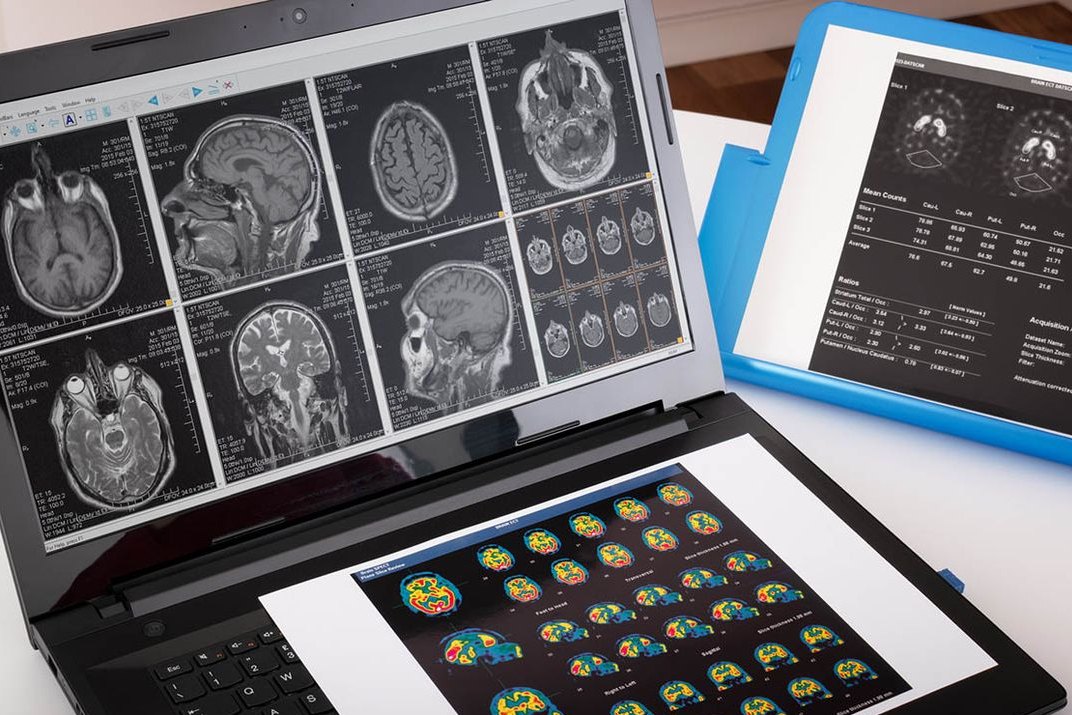
A laptop and a tablet displaying brain scans

What is cognitive acuity?

Cognitive acuity is more than the speed and quality of your thinking. It also includes your mental sharpness, which is how alert and focused you are and how readily you recall what you know, and your cognitive health, which the National Institute on Aging defines as the ability to think, learn, and remember clearly10. Four abilities are involved: attention, memory, processing speed, and executive function.

Sharpness and health are related, but they are not the same. Sharpness is what you notice from day to day, whereas cognitive health is one aspect of overall brain health10, and it depends on the physical condition of the brain, including the white-matter pathways that connect one region with another5. Some clients therefore consult Dr. Rawlin before they have noticed any problem: they would prefer to discover a developing one early.

Cognitive acuity is not the same thing as intelligence. Vocabulary and verbal reasoning remain stable or even improve as people grow older, whereas the speed of thought and the ability to sustain attention tend to diminish3. For this reason, you can be as intelligent as ever and still think more slowly than you once did.

A laboratory report does not measure this difference. Consider two people whose results are equally normal: the first still recalls every name and remains focused throughout the day, while the second has begun to forget names and to lose focus. The second person is aware of the change, although the report does not show it.

This experience is commonly called brain fog. Brain fog is neither a medical term nor a diagnosis; it is the everyday name for a group of symptoms that occur together, namely poor concentration, forgetfulness, slowed thinking, and mental fatigue1. Brain fog also does not indicate that a person has become less intelligent2.

The abilities that make up cognitive acuity

Researchers divide cognitive function into separate abilities, which they call domains. When clients say that they are not as sharp as they used to be, they usually mean that one or more of the four abilities named above has weakened.

These abilities depend on one another. You cannot remember information to which you never paid attention, and you cannot make a good decision about information that you processed too slowly. When one ability weakens, therefore, the others weaken with it, and you feel less sharp in general without being able to say which ability has failed. That is why people speak of a fog.

A profile of a head filled with colored neural pathways

1

Attention and Focus

Attention is the ability to keep your mind on a single task and to return to that task after an interruption. Many people find it harder to sustain their attention as they grow older3.

When attention weakens, you cannot remain focused for as long as you once could. Dr. Rawlin's clients describe this change in plain terms: they say that they cannot focus as well as they used to.

2

Memory and Recall

In daily life, memory is the ability to recall a name or a number at the moment you need it. Forgetting names is the other complaint that Dr. Rawlin hears from his clients, and difficulty in recalling words is a common change as people grow older3.

Forgetting a name from time to time is a normal change, and it does not mean that you have dementia, which is not a normal part of aging3. You should nevertheless consult a physician about any memory loss that is new or that continues to worsen.

3

Processing Speed and Executive Function

Processing speed is the rate at which you take in information and respond to it, and executive function is the set of skills that you use to plan and to solve problems. The two are closely related, because a decision can be made no faster than the information behind it is processed.

Researchers have found that people process information more slowly when the white matter at the front of the brain has deteriorated5. An executive who processes information more slowly needs more time to reach a decision.

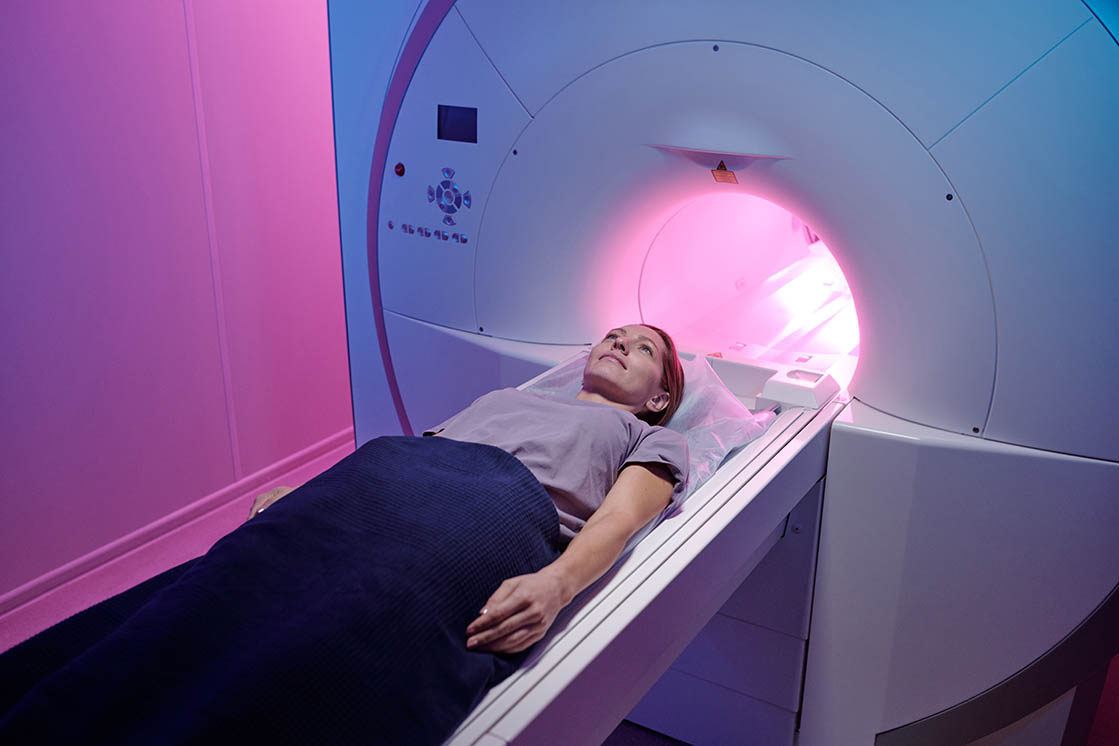
A person lying on an MRI scanner table

When Dr. Rawlin suggests a brain scan

White matter consists of the nerve fibers that connect one region of the brain with another. A standard MRI report may state that the white matter has changed without identifying the pathways affected, whereas a specialized analysis reports the condition of each pathway individually.

Dr. Rawlin suggests this scan only when he believes that the results would help him to understand your case. The scan is performed by an independent imaging center, and it is not a required part of your care.

Cognitive changes after a neurological injury or illness

Some clients know exactly when their thinking changed, because the change followed an injury to the brain or the onset of a neurological illness. Several such conditions, including stroke and Parkinson's disease, are recognized causes of brain fog1. Dr. Rawlin assesses these clients in the same way as any others, and he treats the neural connections that he identifies with Neural Pathway Integration. He works alongside the physicians who manage the condition, and he does not replace them.

Concussion and traumatic brain injury (TBI)

A concussion is a type of traumatic brain injury. It can leave a person unable to think clearly or to concentrate, and it can make new information hard to remember7. Most people feel better within a couple of weeks, but in some people the symptoms last much longer7. Clients consult Dr. Rawlin when these problems have continued long after the injury itself.

Stroke

Problems with memory and thinking are very common after a stroke, and as many as 60 percent of survivors have some cognitive impairment during the first year8. Some of Dr. Rawlin's clients had their strokes many years earlier and had been told that no improvement could be expected after the first year. He does not accept that statement as a final answer, and he assesses each of these clients to find where the brain and body are not working as well as they could.

Parkinson’s disease

Parkinson's disease affects thinking as well as movement. Changes in executive function are frequent, and many people with the disease find it hard to sustain their attention9. Dr. Rawlin works with clients who have Parkinson's disease, and he is documenting these cases as part of his continuing development of NPI. He does not present NPI as a cure for Parkinson's disease.

Long COVID

Brain fog is one of the recognized features of long COVID, and between 5 and 22 percent of the people infected with the virus report cognitive impairment afterward6. Clients consult Dr. Rawlin when this brain fog has persisted long after the infection.

If you have one of these diagnoses, Dr. Rawlin reviews it together with your imaging and your treatment records before you travel, and he tells you during the consultation whether he believes that he can help. The other problems that his clients bring to him are described on the Symptoms We Support page.

Neural Pathway Integration, step by step

Neural Pathway Integration, or NPI, is the treatment method that Dr. Rawlin developed. He uses it to treat two kinds of nerve pathways: the motor pathways, which carry signals from the brain to the muscles, and the sensory pathways, which carry signals from the body back to the brain.

Test – Treat – Retest

  1. He records the way you move.

    On your first day in Layton, Dr. Rawlin records you on video as you walk, squat, lunge, and perform a heel-to-toe walk, which you complete first while watching your feet and then while looking straight ahead. This examination is the Brain-Body Functional Assessment. He performs it even when your only concern is your thinking, because the brain that does your thinking also controls your movement.

  2. He tests the connections.

    He first tests each muscle alone, and he then tests in combination the muscles that a movement requires to act together. In one golfer, the deep gluteal muscles and the calf muscles each worked normally when tested alone, yet the golfer could control neither when both were tested at once. A result of this kind indicates to Dr. Rawlin that the connection between the two muscles is not working. He also determines whether a problem is motor or sensory: a client who can move a foot normally but cannot feel the floor beneath it has a sensory problem.

  3. He treats one connection at a time.

    You lie on a treatment table while he applies pressure with his fingers to the points on your body that his protocol specifies for that connection. One of the brain pathways that he treats involves about thirty separate connections, and he treats them one after another. The treatment is not invasive, and he prescribes neither medications nor supplements.

  4. He repeats the test immediately.

    As soon as he has treated a connection, he repeats the same test, so that you and he can both see at once whether the result has changed. The golfer, for example, returned to the golf simulator and hit the same club again.

  5. He treats every problem on your list, and then he records you again.

    He continues in this way for two to four consecutive full days. Before you leave, he records the tasks from your first day a second time so that you can compare the two videos. He then contacts you the following week, by which time you have been back at work for several days and can tell him whether you think more clearly than you did before.

A client describes the work

[One sentence that states who the client is and what the client describes in the video.]

[Client's name or initial, city and state] — [the reason the client consulted Dr. Rawlin]

The video shows the experience of one client. Dr. Rawlin does not promise the same result to every client, because he cannot know what he will find until he has assessed you.

Patient testimonial video

1.5 to two minutes

Restore or optimize

Clients consult Dr. Rawlin about their thinking for one of two reasons, and he asks the same question in both cases: where are your brain and body not working as well as they could?

Optimize

Your cognitive performance is good, and you believe that it could be better.

You are productive, and your physicians have found nothing wrong. You nevertheless believe that you are not using all of your ability, or you would prefer to discover a developing problem early. You may well be right, because many of Dr. Rawlin's clients did not know that they had a problem until his assessment revealed it.

Restore

You are less sharp than you were, and no one has explained why.

You have seen the specialists and completed the tests. Either your results are within the normal range and no one can explain the change, or you know the cause, such as a concussion or a stroke, and you have been told that you have recovered as far as you will. The brain fog has nevertheless continued, and you now have to work harder to produce the same results. You want to know the cause, and you want to think as well as you did before.

Common questions about cognitive acuity

A clinician looking at brain scans on a monitor

What causes brain fog?

Brain fog has many possible causes. Poor sleep, stress, certain medications, hormonal changes, and illnesses such as long COVID are among the recognized ones2 6, which is why you should consult a physician first. Many of Dr. Rawlin's clients contact him only after their physicians have found no cause, and most of them have other health complaints as well, which are described on the Symptoms We Support page.

Is cognitive decline a normal part of aging?

A slight loss of thinking speed and attention is considered normal, whereas dementia is not3. Not everyone declines, however: the National Institute on Aging describes people in their eighties whose memory matches that of people twenty to thirty years younger4. For this reason, Dr. Rawlin does not accept age alone as the explanation when a client thinks less clearly than before.

Can cognitive acuity improve?

The answer depends on the cause. Brain fog often improves gradually once its cause has been found and addressed2. Dr. Rawlin does not promise a particular result, because he cannot know what he will find until he has assessed you.

When should I see a physician about brain fog?

You should see a physician if brain fog persists or worsens over several weeks. You should seek immediate care if it is accompanied by confusion, difficulty speaking, changes in vision, weakness or numbness on one side of the body, or a severe headache2. The Finery does not replace that medical evaluation.

How much time does the care take?

Most clients spend two to four consecutive days with Dr. Rawlin in Layton, Utah, and then fly home; the consultation and the follow-up both take place remotely. He organized the practice in this way because his clients cannot leave their responsibilities for a program that lasts 30 or 60 days. You can read how each visit is planned on the Your Pathway page.

Does insurance cover the care?

No. The Finery is a private practice and does not bill insurance companies. Dr. Rawlin’s team discusses the fees with you during your discovery call.

How to begin working with Dr. Rawlin

  1. 01

    Book a discovery call

    You complete a short questionnaire and choose a time for the call; no referral is required. Dr. Rawlin’s team asks what you would like him to address and, if it is something he treats, schedules your video consultation with him.

  2. 02

    Speak with Dr. Rawlin

    During a video consultation, Dr. Rawlin reviews your history and any records that you have sent, and he tells you what he would examine and what he would treat.

  3. 03

    Schedule your days in Layton

    His team then schedules your visit to The Finery, which is located at 124 S Fairfield Rd E, Layton, Utah 84041.

Ask Dr. Eric

If you have a question about Cognitive Acuity, or if you would like to know whether Dr. Rawlin can help you, you may submit it here. He reads the questions himself.

Submit your question →
Ask Dr. Eric, founder of The Finery and creator of Neural Pathway Integration

Reviewed by Dr. Eric Rawlin, DC, October 2026.

Sources

  1. American Academy of Neurology, Brain & Life, “What Is Brain Fog?”
  2. University of Rochester Medical Center, “What Causes Brain Fog?”
  3. UCSF Memory and Aging Center, “Healthy Aging”
  4. National Institute on Aging, “How the Aging Brain Affects Thinking”
  5. Cerebrum, “Cognitive Skills and the Aging Brain: What to Expect”
  6. National Library of Medicine, PubMed Central, “Comprehensive Clinical Characterisation of Brain Fog in Adults Reporting Long COVID Symptoms”
  7. Centers for Disease Control and Prevention, “Facts About Concussion and Brain Injury”
  8. American Stroke Association, “Cognitive Challenges Post-Stroke”
  9. Parkinson’s Foundation, article on cognitive change in Parkinson’s disease
  10. Maryland Department of Health, “Cognitive Health”, which cites the National Institute on Aging’s definition