
The Finery
Conditions and SymptomsDr. Rawlin Sees at The Finery
Understanding How Your Brain Affects Your Body
Your brain controls the movements of your body and receives sensations from it through signals that travel along neural pathways1. When those signals no longer pass through a connection in one of these pathways, you may lose some of your strength, feeling, balance, or mental clarity, and the loss may persist even when your physicians find nothing wrong in your tests. At The Finery, Dr. Eric Rawlin, DC, works with clients who have symptoms of this kind or a diagnosis such as neuropathy, Parkinson’s disease, or stroke, and with clients who feel well and want to perform better. In each case, he looks for the neural connections that are not working and treats them with Neural Pathway Integration, the method that he created.
At The Finery, Dr. Rawlin begins by examining the connections between the brain and the body.

What clients describe
Symptoms That Many People Recognize
You can read a short description of each symptom here and follow the link on its card to a longer article.

Brain Fog
Brain fog is the common name for thinking that has become slow or unclear. You may notice it as trouble concentrating, or as the sense that you are not as sharp as you used to be, which is how many executives describe it when they first speak with Dr. Rawlin. Because clear thinking depends on signals that pass between the regions of your brain, he tests for the connections that are not working, and some clients find that they think more clearly after treatment.
Read More →
Memory
You may forget names or lose your focus more easily than you once did, which are complaints that Dr. Rawlin often hears from executives, and you may also need more time to understand new information. Because memory depends on particular centers of the brain and on the connections between them, he tests and treats those connections, and memory is one of the abilities in which some clients notice improvement.
Read More →
Migraines
Migraines that keep returning, even after your physicians have treated them, may be one of several complaints that you have. Clients mention headaches among their complaints on the first call with Dr. Rawlin, and some of them report that their migraines improve after treatment.
Read More →
Chronic Pain
Chronic pain is pain that continues for months or years, sometimes after the original injury has healed, and your physicians may find no cause for it in your scans. One explanation is that your body is still protecting the old injury: you may still shift your weight away from a knee after surgery on that knee, for example, without noticing that you do it. Dr. Rawlin looks for the neural connections that maintain this protection, and some clients have less pain once those connections are treated.
Read More →
Fatigue
Fatigue is tiredness that remains after a full night’s sleep, and it can be mental as well as physical. When some neural connections are not working, the rest of your body has to work harder to compensate for them, and in Dr. Rawlin’s view, that extra work is one reason that a person tires. One of his clients, whose case appears under Stroke on this page, had more energy after two days of treatment.
Read More →
Allergies
You may have allergies that your physicians have not been able to control. Dr. Rawlin does not treat an allergy itself, but some clients report that their allergies improve after his treatment.
Read More →
Neuropathy
Neuropathy is damage to the nerves outside the brain and the spinal cord, and clients who have it often tell Dr. Rawlin, “I can’t feel my feet.” Because they cannot feel the floor, their balance is often poor as well. Dr. Rawlin first determines whether you have lost your ability to move or your ability to feel, since each of these abilities depends on a different pathway. After treatment, some clients regain enough feeling in their feet to walk along a line and to stand on one foot.
Read More →
Tremors
A tremor is a shaking that you cannot control in a part of your body, such as a hand, and it can make typing difficult or impossible. A tremor is one of the symptoms that Dr. Rawlin follows in a client with Parkinson’s disease, and you can read about that client under Parkinson’s disease on this page.
Read More →
You can read further articles about these symptoms in the Insights library.
Find out more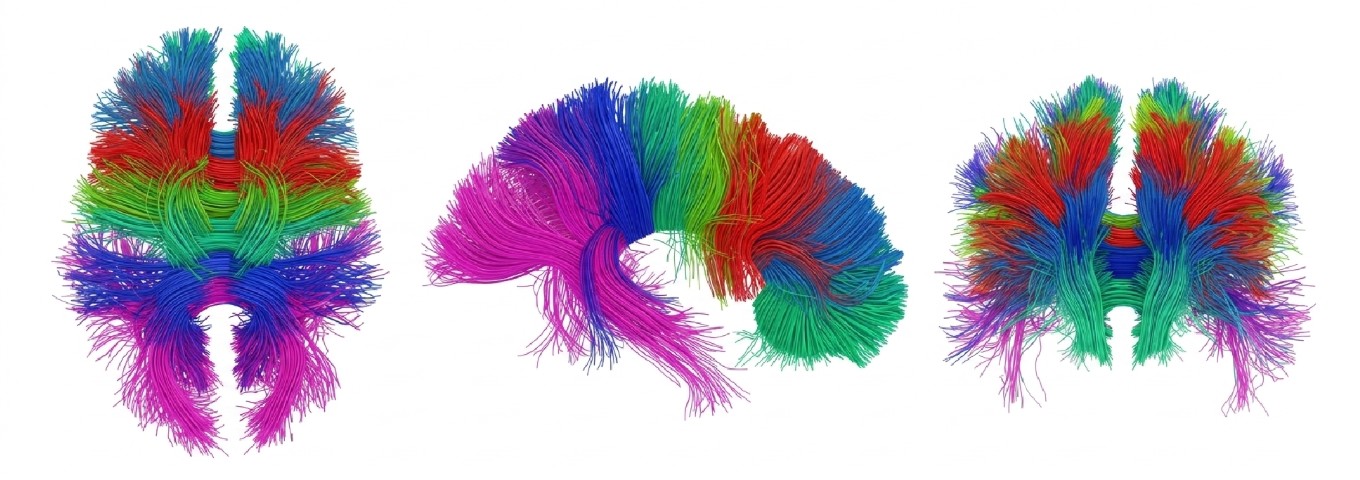
Conditions We See
Conditions Seen Among Dr. Rawlin’s Clients
Many clients arrive with a diagnosis, and their physicians continue to manage the condition. Dr. Rawlin’s part is to determine which abilities you have lost and which neural connections are involved in that loss. His clients include people with the conditions and complaints listed here, and each result described in the list is his own observation of an individual client.
Parkinson’s disease. Dr. Rawlin does not present Neural Pathway Integration as a cure for Parkinson’s disease, but he works with clients who have it and is documenting two of these cases in detail. One client, who was diagnosed three or four years before his first visit, had regained the ability to do full squats and to ride horses by July 2026, and his tremor had almost disappeared. The other client has had the disease for more than ten years and remains in treatment.
Stroke. Some clients had their strokes many years ago and were told that no further improvement could be expected. One such client, nineteen years after her stroke, had more energy and had regained the peripheral vision in her right eye after two days of treatment, although the vision in her left eye was still impaired.
Multiple sclerosis. Clients with multiple sclerosis also work with Dr. Rawlin, and some of them improve with treatment.
Loss of vision. One client had been without sight in one eye for four and a half years. By the end of her first day of treatment, she could see movement and color with that eye, although she could not yet see sharply.
Concussion. The effects of a concussion can last long after the injury, and you can read about them on the Cognitive Acuity page.
Long COVID. Some clients have symptoms that have persisted since a COVID-19 infection, and some of these clients improve with treatment.
Vertigo and vestibular neuritis. Some clients have vertigo, and others have vestibular neuritis, which is an inflammation of the nerve that carries balance signals from the inner ear to the brain.2 Some of these clients have improved with treatment.
Digestive problems. Most clients report a digestive problem, such as irritable bowel syndrome or acid reflux, in addition to their main complaint.
Heart complaints and laboratory results. Some clients also have a heart complaint or take medication for high blood pressure. Before a visit, Dr. Rawlin reviews the laboratory results that clients send him, including those for the liver and the kidneys.
Strength, mobility, and athletic performance. Weakness, limited mobility, and injuries that recur are among the complaints that clients report. Even clients who perform well, including professional golfers, can have muscles that do not respond when Dr. Rawlin tests them.
Changes in mood. Some clients mention anxiety, irritability, burnout, mood swings, or a feeling of being overwhelmed. One client became calmer after treatment and no longer shouted when he was upset.
Several complaints at once. Clients usually arrive with a list of several complaints, and Dr. Rawlin goes through the whole list with them during a single visit of two to four days.
On the Cognitive Acuity page, you can read how these conditions affect thinking, and on the Neural Pathways page, you can read how they affect movement, sensation, and balance.
The Finery
Let Us Help You Get Your Health to Its Finest Level
Dr. Rawlin asks the same question whether you have one of these conditions, know that something is wrong and cannot name it, or feel well and want to perform better: Where are your brain and your body not working as well as they could?
You first speak with a member of the team on a discovery call. If Dr. Rawlin treats problems like yours, you then speak with him by video, and in most cases, he can tell you during that conversation how he would treat the problem. If your symptom is new or sudden, or if it is becoming worse, see a physician first.